11
Sep
Barranco wall Kilimanjaro
Barranco Wall on Mount Kilimanjaro
Conquering Mount Kilimanjaro is a bucket-list dream for adventurers worldwide. While the ultimate goal is Uhuru Peak, one of the most famous, thrilling, and visually stunning milestones of the entire trek is the legendary Barranco Wall.
Often referred to by guides and operators as the “Barranco Breakfast Wall” because you tackle it first thing in the morning, this massive rock structure looks incredibly intimidating from afar. However, once you get close, it transforms into an unforgettable highlight.
If you are planning to trek Kilimanjaro via the Machame, Lemosho, Shira, or Umbwe routes, you will face this iconic wall. This complete guide breaks down the location, height, safety, and insider secrets of the Barranco Wall to help you prepare for the climb of a lifetime.
Where is the Barranco Wall Located?
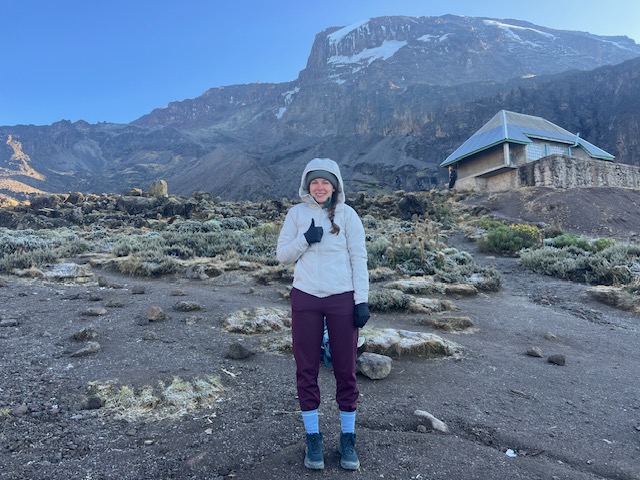
The Barranco Wall is located on the southern slope of Mount Kilimanjaro within Kilimanjaro National Park, Tanzania.
Trekkers arrive at the base of the wall after spending the night at Barranco Camp, which sits in the shadow of the breach wall at an elevation of roughly 3,900 meters (12,800 feet). The wall serves as the primary gateway leading out of the Barranco Valley as you cross the mountain’s southern circuit toward Karanga Camp.
What Does the Name “Barranco” Mean?
The word Barranco is of Spanish origin and translates to “ravine,” “gorge,” or “canyon.” It perfectly describes the dramatic, steep-sided geological valley formed by massive volcanic landslides and collapsing craters on Kilimanjaro roughly 150,000 to 200,000 years ago.
Barranco Wall Height and Elevation
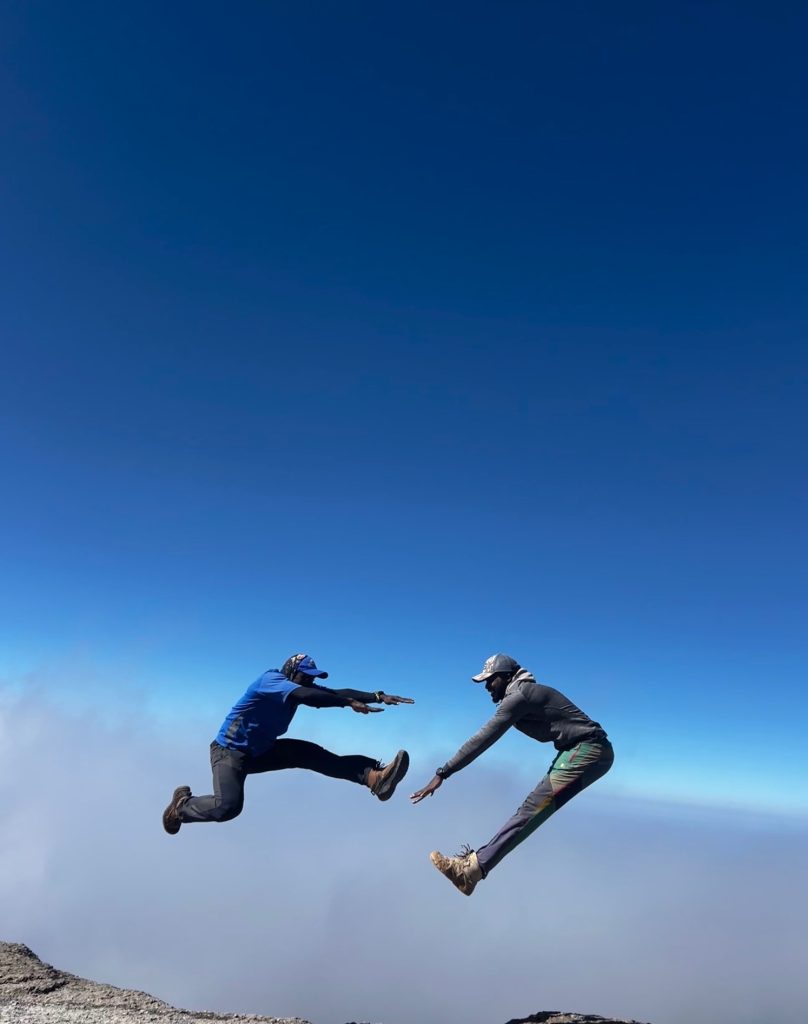
The Barranco Wall rises 257 meters (843 feet) from the valley floor.
- Base Elevation: ~3,900 meters (12,800 feet)
- Summit of the Wall Elevation: ~4,200 meters (13,780 feet)
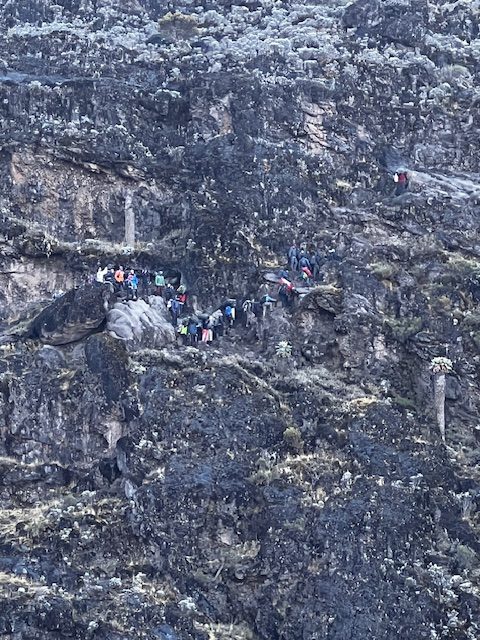
While a 257-meter vertical gain sounds intense, the trail does not go straight up a sheer cliff. Instead, it snakes, switchbacks, and weaves through a giant puzzle of volcanic boulders and ledge networks.
How Long Does it Take to Climb Barranco wall?
For the average trekking group, it takes between 1.5 to 2.5 hours to reach the top of the Barranco Wall.
The duration depends largely on your physical pace, altitude acclimatization, and foot traffic. Because many tour groups leave Barranco Camp at a similar time in the morning, bottlenecks can happen at the narrower sections. The golden rule here is pole pole (Swahili for “slowly, slowly”)—taking it slow reduces fatigue and lets you safely enjoy the scramble.
Barranco Wall Difficulty: How Dangerous Is It?
| Feature | Details |
|---|---|
| Climbing Grade | Class 2 to Class 3 Scramble (Non-technical) |
| Ropes/Harnesses Required? | No specialized climbing gear or ropes are needed. |
| Exposure | Moderate. There are steep drop-offs, but the path itself is secure. |
| Physical Effort | Uses all four limbs (hands and feet) to pull yourself over boulders. |
Have There Ever Been Deaths on the Barranco Wall?
Despite its fierce reputation and internet nicknames like the “Death Wall,” there are no official records of climber deaths caused directly by the Barranco Wall.
While roughly 5 to 10 fatalities happen on Mount Kilimanjaro annually across all routes, the vast majority are caused by Acute Mountain Sickness (AMS) or high-altitude pulmonary/cerebral edema at much higher elevations. The Barranco Wall is highly managed by professional Tanzanian guides who scout placements for every single step you take.
Can Anyone Climb Barranco wall?
Yes! Anyone with a reasonable level of physical fitness and good mobility can navigate the Barranco Wall. You do not need any formal rock-climbing experience.
The biggest barrier is psychological rather than physical. If you suffer from severe vertigo or fear of heights, the exposure can feel intimidating. However, focusing strictly on the rock directly in front of you—and avoiding looking down—makes it completely manageable.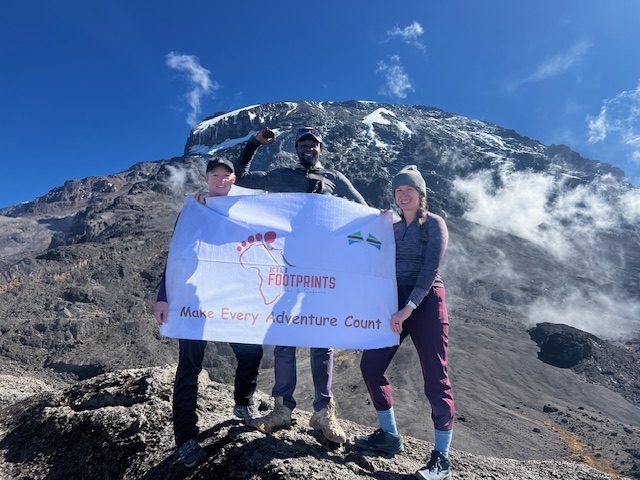
The Secret of the “Kissing Rock”
The absolute highlight of the ascent is a famous geological choke point known as the “Kissing Rock” (or Hugging Wall).
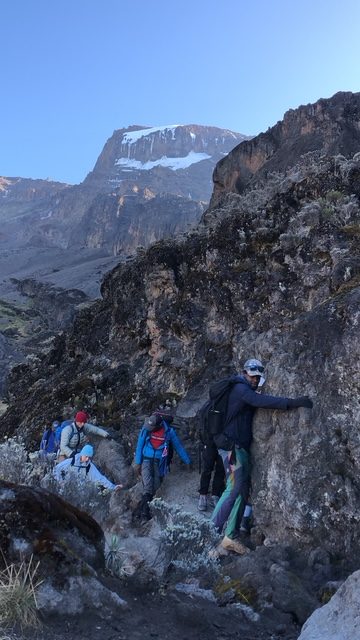
About two-thirds of the way up the wall, the path narrows into a tiny ledge hugging a massive, rounded boulder. To pass safely, you must turn your body inward, face the stone directly, and creep sideways across the ledge.
Because you are pressed so tightly against the mountain, your face is literally inches from the stone—hence the name “Kissing Rock”! It makes for an incredibly fun photo opportunity and a memory you will talk about long after your trek
What to Do with Your Trekking Poles?
Before you take your first step off the valley floor, pack your trekking poles away completely.
Do not try to hike with them in your hands or dangling from your wrists. The Barranco Wall requires a Class 3 scramble, which means you need three points of contact at all times. You will actively use both of your hands to grip rock faces, pull yourself over large stones, and balance across narrow ledges. Shorten your poles and clip them securely to your backpack or stow them inside until you reach the flat summit crest.
Weather and Best Time to Start
- Best Time to Start: It is highly recommended to start climbing between 7:00 AM and 8:00 AM. Climbing first thing in the morning ensures your hands are warm, your energy levels are high, and the rock face hasn’t been slicked by afternoon moisture or fog.
- Weather Conditions: The weather at Barranco Wall can change rapidly. Mornings are typically crisp, clear, and cold, but as the sun hits the southern face, temperatures rise. However, the area is prone to sudden alpine mist, swirling clouds, and strong winds moving up from the Barranco Valley. Layering your clothing is key.
Route Logistics: Karanga Camp vs. Barafu Camp
Depending on whether you chose a shortened or extended itinerary on routes like Machame or Lemosho, your trek after the wall will look different:
Option A: The Extended Route (Overnight at Karanga Camp)
On standard 7-day or 8-day itineraries, you climb the Barranco Wall and then hike for another 2 to 3 hours through alpine deserts to spend the night at Karanga Camp (4,000m). This is highly recommended by experts because it gives your body an extra day to acclimatize to the altitude, significantly increasing your ultimate summit success rate.
Option B: The Express Route (Straight to Barafu Camp)
On short, aggressive 6-day itineraries, climbers skip the overnight stay at Karanga Camp. After tackling the Barranco Wall in the morning, you take a short lunch rest at Karanga and continue pushing straight up to Barafu Camp (Base Camp at 4,673m). This results in a brutal, exhausting 6-to-8-hour hiking day right before your midnight summit push.
Final Thoughts: Don’t Fear the Wall!
The Barranco Wall looks terrifying when you view it across the valley over hot tea at camp. But almost every climber leaves Kilimanjaro stating that the wall was their favorite and most exhilarating day on the mountain. Pack your poles, listen to your guides, give the “Kissing Rock” a polite hug, and enjoy the jaw-dropping views from the top!